Iron Bar Fitness
One connected system to run a 24/7 gym
A local gym went from zero online presence to a custom website, an integrated merch shop, and a members-only operations dashboard — all one unified system.
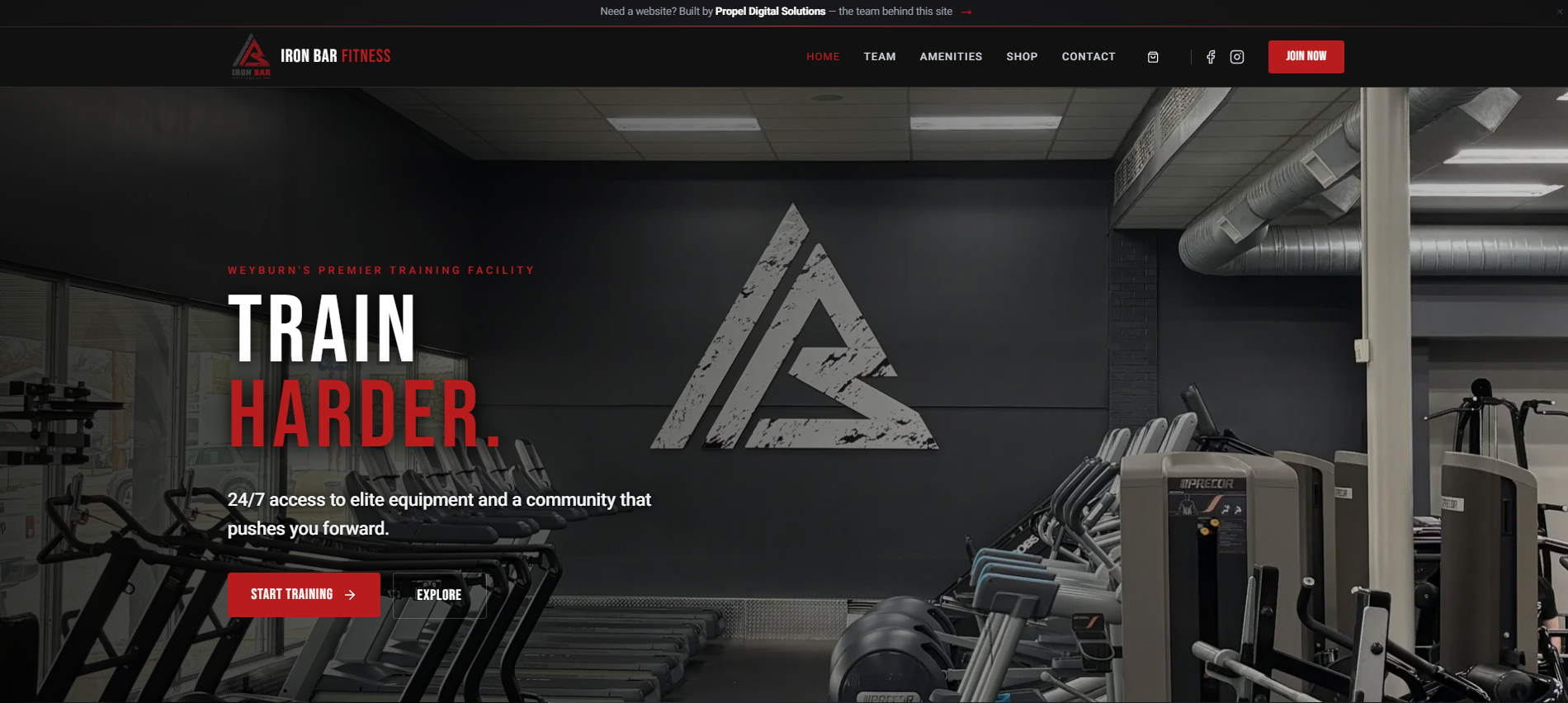
The problem
Iron Bar Fitness is a 24/7 gym in Weyburn, Saskatchewan. Over 500 active members, 10+ years in operation, 5,000 square feet of equipment — and no website. No way to sell merchandise online. No centralized system for the owner to manage day-to-day operations. Everything was either disconnected or didn't exist.
The gym had built a loyal local following through word of mouth, but was invisible to anyone searching online. New residents, people comparing gyms, anyone doing a quick Google search — they'd find nothing.
What we built
We designed and built a custom website from scratch. Not a template. The site reflects the gym's identity — dark, bold, built around the brand's red and black palette with the Iron Bar logo front and center.
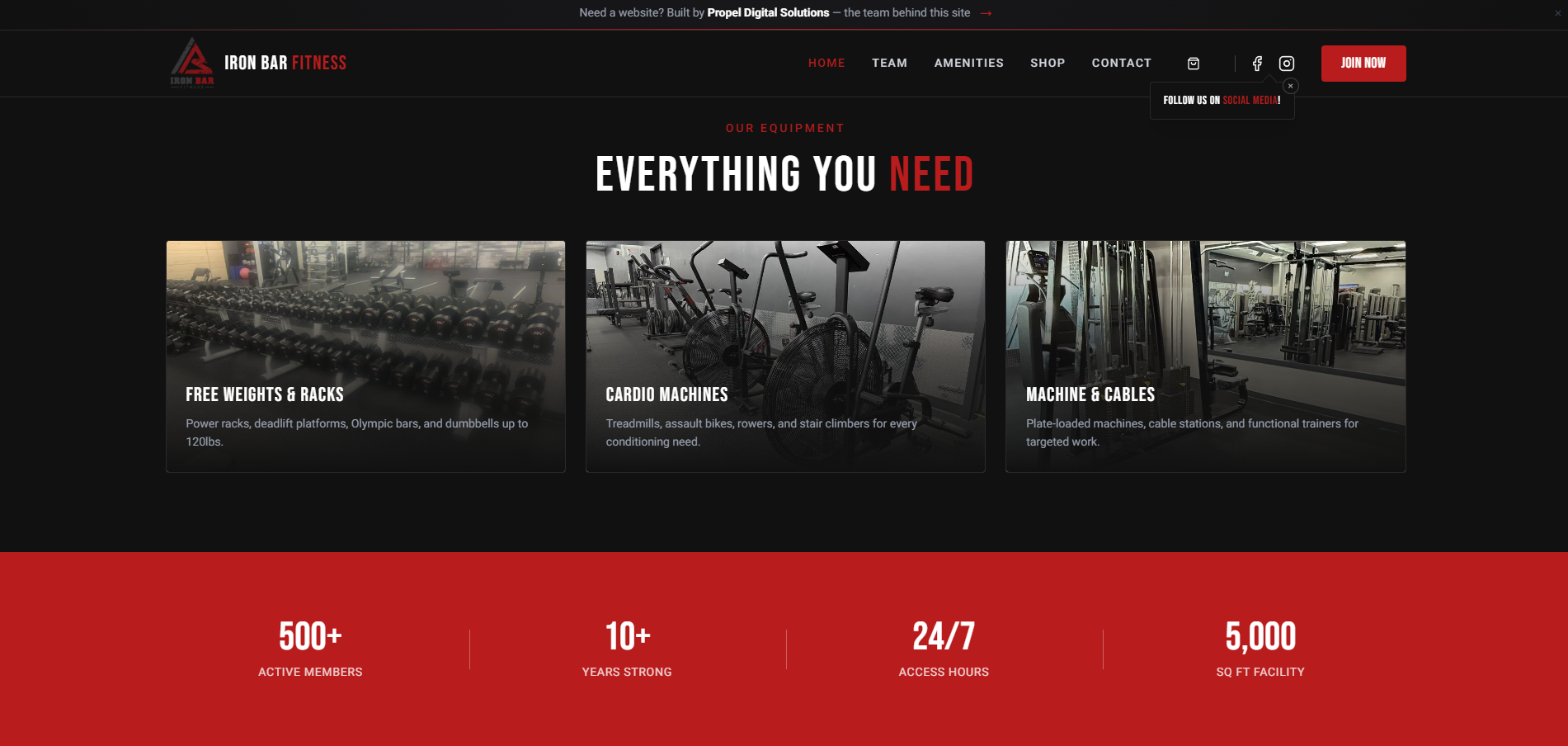
The site covers everything a prospective member needs: equipment breakdowns across free weights, cardio, and machines. Team introductions. Membership pricing with a clear signup flow. Contact information. The full picture, all in one place.
Integrated merch shop
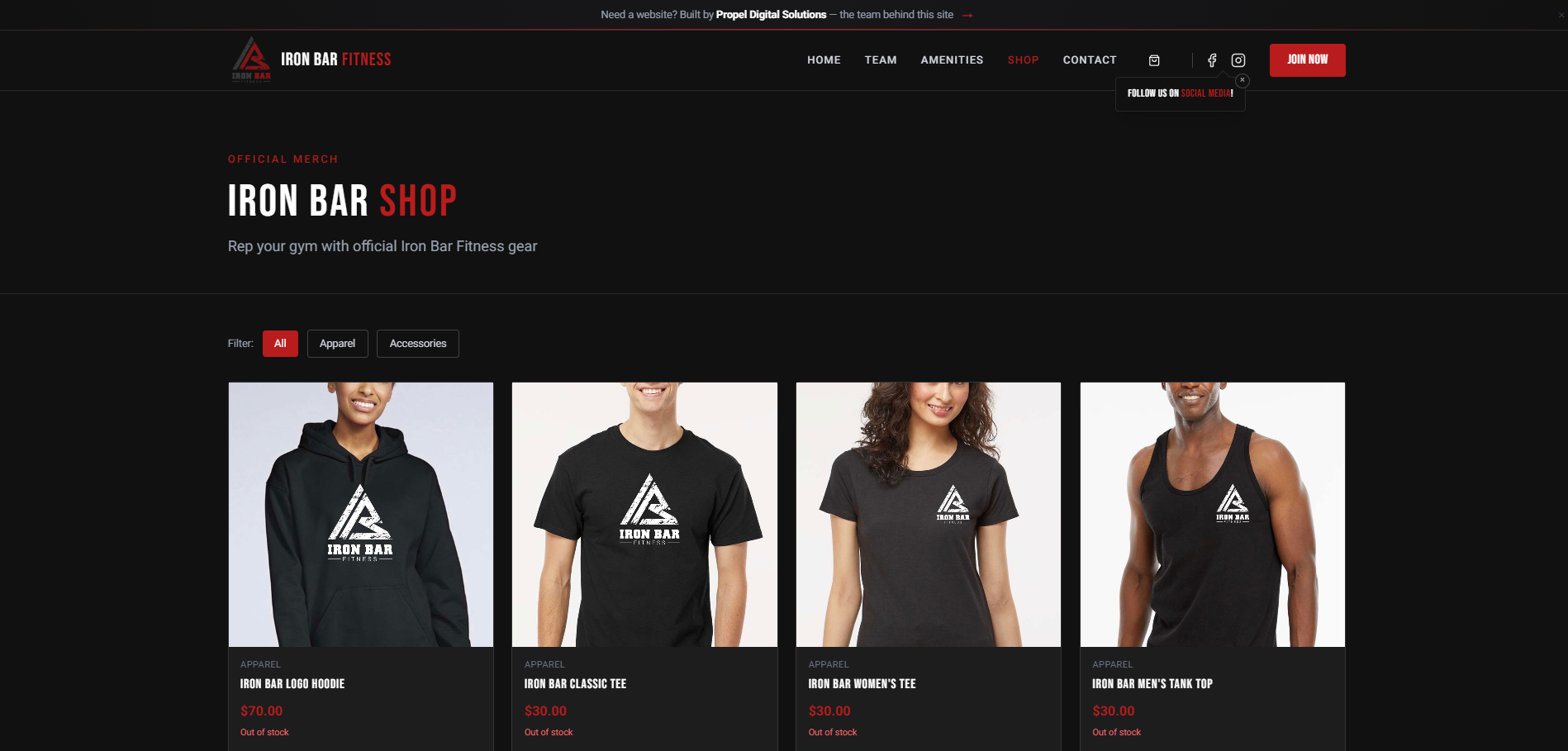
We built an e-commerce shop directly into the site so members and supporters can browse and buy official Iron Bar gear — hoodies, tees, tank tops — without leaving the domain or being redirected to a third-party store.
Membership & signup
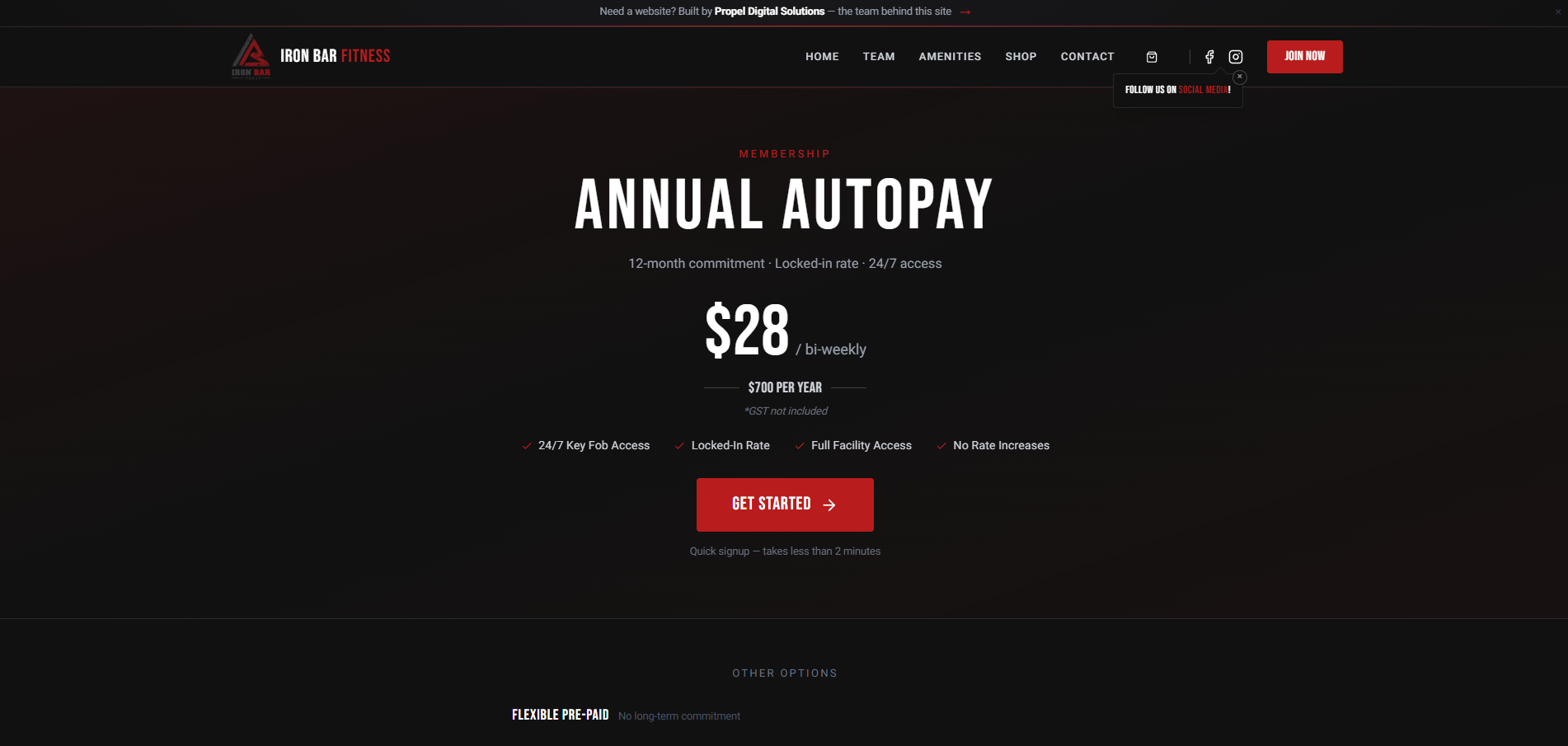
The membership page breaks down pricing clearly — annual autopay, flexible pre-paid, and drop-in options — with a direct signup flow that takes under two minutes. No phone calls, no paper forms.
Operations dashboard
Behind the scenes, we built a members-only admin dashboard so the owner can manage gym operations from one place. All three systems — website, shop, and dashboard — are connected. Not three separate tools duct-taped together. One unified system that shares the same data.
The outcome
Iron Bar Fitness went from zero online presence to a fully connected system. The website brings in new members. The shop generates merchandise revenue. The dashboard centralizes operations. And the owner manages all of it without calling a developer.
Want to see what your new website could look like?
Paste your URL and we'll rebuild your site for free. You see the result before you pay anything.